It's more fun in the Philippines
Win a fabulous four night vacation in Bali!


The Road to Nowhere
by Nicholas Gill
Published in the July-September 2012 issue.


The barren but breathtaking lands of southern Patagonia provide a surreal backdrop for a road trip along Chile’s Carretera Austral. Expect glaciers and mesmerising wilderness reserves; be surprised by smart lodgings and off-the-beaten-track diners.

Driving south from Coyhaique, the terrain begins to change. At first, the windswept plains seem endless – just sheep and tall grass. Then mountains appear. The road begins to bend and climb. The farther you drive, the closer the mountains get. Within a couple of hours, it feels as if you are in a different world. You ask yourself if this is the same country.

Am I still in Chile? Then you round another corner and ask yourself the same thing again.

 
The vast majority of travellers to Chilean Patagonia head south to the Torres del Paine; the few who visit the more isolated northern half of Patagonia generally stick close to Puerto Montt, visiting Pumalin Park or Futaleufú. Even fewer people head south of Coyhaique, where my trip is concentrated, primarily because most people don’t realise you can even go this far. Few maps list the roads and towns found here.

This stretch of the Carretera Austral – the 1,240-kilometre highway from Puerto Montt to Villa O’Higgins – wasn’t even finished until 2003. Three decades ago, dictator Augusto Pinochet feared war with Argentina and decided to connect the region with the rest of the country, to gain influence and expand his nation’s population. This, the Aysén region, is still a sort of “no man’s land,” with less than one person per square kilometre.



The road has cost more than US$300 million and it is still, for the much part, unpaved. For most of the year it is impassable; yet when that window opens, from November to March, no other drive in the world can quite compare.

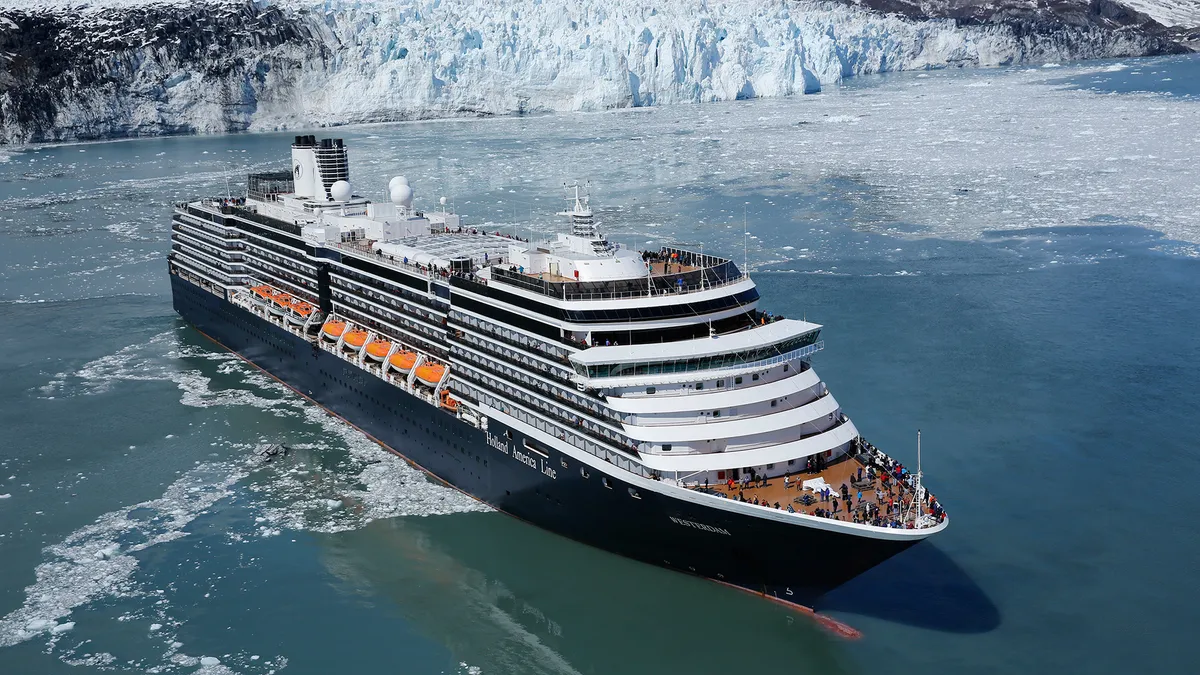
Before setting off from Coyhaique – the largest city in the region, with less than 50,000 people – I spent the day in Laguna San Rafael National Park, a UNESCO World Biosphere Reserve that’s home to a 40-kilometre-long blue glacier, the closest sea-level icefield on earth to the equator.

There’s no real roughing it here: the Catamaranes del Sur ferries are more Titanic-style liners than cargo vessels; there’s a full bar and a live band on board; everyone mingles. Two twentysomething Chiléans talk to me about their beach house south of Valparaíso. I know the town. Just off the beach, there’s a large rock with an even larger cactus growing out of it. It’s bizarre, but so is this place.


From Puerto Chacabuco, it takes a few hours of weaving through narrow inlets lined with tracts of temperate rainforest and a-lion rookeries to reach the glacier. At first there are pieces of ice floating by; then you turn a corner into what seems like the ice planet Hoth from The Empire Strikes Back. Everything is translucent blue.

The ship anchors and, group by group, we climb aboard Zodiacs to get a closer look. The rubber rafts look miniscule beside the glacier, which howls and screams as waves crash against it. Beside the glacier, there are lines marking the points to which it has receded each year. The last few years’ lines show a much faster pace.

As the Zodiac I’m in approaches, a wall of ice crashes into the water. It sounds like a car crash and lasts for minutes. As we drift back toward the ship, the Zodiac’s driver pulls in a watermelon-sized piece of ice. Later, we chop it up and drop it into glasses of whiskey.

The next morning, I make it to the rental-car office in Coyhaique before it opens. You cannot just rent any car here if you plan on leaving town. It has to be a 4WD, and you’ll need to get extra tyres and petrol can thrown into the back or you won’t get anywhere. It’s a long way between towns, and you can count the number of petrol stations in the entire region on one hand. This isn’t a drive – it’s an expedition.

After leaving Coyhaique, the first place we reach is the Reserva Nacional Cerro Castillo, which is anchored by a castle-like set of glacier-topped basalt-rock towers. Soon, the pavement ends and turns to gravel. It stays that way until the road stops.

We break for lunch at La Cocina de Sole, a roadside diner in the middle of nowhere, set inside an old city bus. There are towering mountains all around. A few dogs mill about. The menu reads like a dictionary of Chiléan junk food: it consists mostly of sandwiches pairing beef with things even fattier. I order the barros luco, which adds a gooey cheese.

A few kilometres away, we stop at the Manos de Cerro Castillo, where the Tehuelche tribe, as far back as 10,000 years ago, left paintings of their hands beneath a rocky ledge. Some are from children’s handprints; most are from adults. They are red, black and brown. Some are traced around the hand, while others fill in the imprint. It’s a national monument. They call it “pre-historic artwork” and there are larger examples across the border in Argentina. Standing there, I don’t know what to think. It’s a very human spot. Maybe the desolation of the place makes the connection stronger. 

As I get back in the truck, a gaucho – complete with a wool beret, scarf and Thermos flask of yerba mate, which everyone here drinks – asks for a ride. You don’t refuse anyone here: rides are hard to come by and public transportation, apart from buses from Coyhaique once or twice a week, is non-existent. Everyone relies on each other.

We try to converse but his Spanish is incomprehensible. Chiléans, in general, lack clear pronunciation and slur their words, and this guy is complicating things further by throwing in German phrases – common here – and Argentinean slang. He asks to be dropped off about 30 minutes down the road and just walks off into the wilderness to God-only-knows where.


There are dozens of fly-fishing lodges in the area, but I opt for Hacienda Tres Lagos, a 20-room homestead set on 1,500 hectares of land among three lakes, not far from Cruce El Maitén and the southern end of Lago General Carrera.

The sun is setting. An Italian couple and their friend, making a similar drive (though planning to cut across to Argentina the next day), are already inside drinking carmenére by the fireplace. I drop my things in my room and we all move into the dining area. A lamb has been killed that morning and is now roasting beside an open hearth, asado style. After about 10 hours of driving, I couldn’t have planned a more perfect end to the day.
I stay three days at Tres Lagos and am the only guest for two of them. I zip line, hike up a mountain, ride horses, go fishing and gaze through a telescope at the night sky. I could stay on, but the road beckons.

I stop for petrol in Cochrane and continue south. The road becomes rougher. Every few kilometres, I glimpse a Chiléan huemul deer, one of the four South American camelids. Signs of human life are less frequent.

By afternoon, I’m in Caleta Tortel. Everyone at Tres Lagos said I should come here. They were right: this out-of-the-way lumber town could be the most picturesque place in all of South America – which is saying a lot.

Here, there are no streets but there is a parking lot above town and from here, you walk along several kilometres of wooden walkways that climb over hills, around fjords and along the crème de menthe-coloured Rio Baker. They call it the Venice of Patagonia. This is the region’s next big thing. Or is it?

A hydroelectric project that has drawn fierce objections from environmentalists in the region, it promises to dam the Rio Baker and forever change the landscape. The locals are mixed in their views on the subject. They want jobs. Now that there’s a road, a trickle of tourists is coming here over the summer months.

Most of the hotels and restaurants here are part of family homes. Locals operating boat trips to the Montt and Steffens glaciers bring in a little extra income but as yet, it’s not enough to make a living. The only other tourist I encounter is a National Geographic photographer.

From Tortel, the terrain becomes even more desolate. I have no good reason to continue on to Villa O’Higgins, four hours to the south, other than to reach the end, but I go anyway. A sporadic ferry service there crosses the border, passing in sight of the Southern Ice Field. It isn’t running that week; still, I drive on, past cypress-covered hills and mountains whose glacial peaks drip with waterfalls.

The town is nearly empty. I pick up empanadas from the single open shop and turn back. At the edge of town, two Canadians hold out their thumbs as I rumble by. I slow down to pick them up.

They have been waiting for a ride for six days. •

Photography by Nicholas Gill.


Getting there
LAN Airlines flies from Australia to Santiago. Coyhaique’s El Aeropuerto Balmaceda receives daily flights from Santiago, Puerto Montt and Punta Arenas with LAN and Sky Airlines.
• LAN. 1800-558-129; lan.com
• Sky Airlines. skyairline.cl

getting around
Trucks and 4WD cars can be rented at Balmaceda airport and in Coyhaique from Hertz. 56-67/231-648; hertz.cl
Make reservations for ferry services well in advance as they tend to fill up, even during low season. The trip from Puerto Montt to Chaitén requires a ferry crossing (in operation all year).
Trafalgar offers tours around South America including Chile. 1300-663-043; trafalgar.com

When to go
From December through February, temperatures in the region are warmer and the roads are clear; shoulder months can also offer favourable conditions for travel.

Where to Stay
• Cinco Rios Chilé. 56-67/244-917; cincorios.cl
• Hacienda Tres Lagos. 56-67/411-323; haciendatreslagos.com
• La Pasarela. 56-9/9818-7390; lapasarela.cl
• Terra Luna Lodge. 56-67/431-263; terra-luna.cl

Further information
The National Tourism Service of Chilé can provide additional tips on travelling around Patagonia. 56-2/731-8336; 
chile.travel
Hyatt Regency - the perfect escape
Get our latest newsletter
Sign up today to receive travel tips, the latest travel news & exclusive competitions, straight to your inbox!


V&T Takeoff
Updates from our editors and writers
It was a night of great unveils when Relais & Châteaux revealed its three new “Routes du Bonheur” on Tuesday with a surprise appearance by actor and winemaker Sam Neill; Vranken Pommery gave the first preview of its new Aboriginal design POP Art Champagne and French chocolate house Valrhona introduced the world’s first “blond chocolate”, called Dulcey.
The team from the Dallas Convention and Visitors Bureau were in town last week to update Australia on some of the BIG things happening in the Texan state.
V&T mag dropped into Bali last month and helped the W Retreat & Spa celebrate their 2nd anniversary and what a splash it was. With local and international fashion designers on display, the W Lounge was transformed into a catwalk party zone. 2500 people flowed through the resort late into the night, moving to NYC DJ Sandy Rivera. This was the biggest ticket in Bali for some time and the resorts pulling power is a testament to just how hot this property and international hotel brand actually is.www.vacationsandtravelmag.com/Mca/874/765/3/0/0/#takeoff1 How did we cope the next day? Poolside. Don’t wait until their 3rd anniversary as the vibe, sound and style of this resort makes for a very cool holiday. In the heart of Seminyak and right on the beach, Bali beckons.
Thanks to our friends at Air France we got out of the office for the day and enjoyed a great round of golf at the annual Financial Markets Charity Golf Day and Gala Dinner. Held annually in February, this event as well as the  Financial and Media Markets Charity Sailing Regatta in October raises AU$1.2 million for a wide range of charities.The ASX Group and Thomson Reuters Australia (formerly Reuters) joined forces in 1999 to form a Charity Foundation with the objective of helping Australian-based children, disability and medical research charities by organising fundraising events in conjunction with the Financial Markets. Pictured here: Thomas Reeves Air France, Middle, Patrick Benhamou, Atout France; Anthony Gallagher Vacations & Travel magazine.
Vacations & Travel magazine rubbed shoulders with local and international buyers and sellers of travel from around the globe at 2013 AIME (Asia Pacific's Incentive Meeting Expo). This is the biggest event on the Australian travel industry calendar, where key decision makers congregate to network over a three-day event of hosted parties, trade and leisure travel meetings and press conferences.
The who's who of Sydney's entertainment industry turned up for the recent opening of the city's newest hotel to receive a makeover, The Parkroyal. Located in Darling Harbour, the property has just emerged from a milt million-dollar makeover to reveal striking rooms and seriously sexy public spaces. Speaking of sexy, some of the celebs on hand to celebrate the re-launch included Casey Burgess, Danielle Blakey and Amy Milne, not to mention Timomatic who entertained the crowds into the witching hours…


about us advertise subscribe & win contact us Golf Vacations