It's more fun in the Philippines
Win a fabulous four night vacation in Bali!


dishing up ecuador
By Natasha Dragun
Published in the October-December 2011 issue.

Take some of the world’s highest volcanoes, add spectacular biodiversity and well preserved Spanish and Incan cultures and you have all the ingredients for an Ecuadorian festejos of grand proportions.

It’s blessed with one of the world’s most compelling destinations – the Galapágos Islands – and neighbours some of South America’s most fabled sights, yet mainland Ecuador is often regarded as no more than a convenient stopover. Which is a shame, because apart from its extraordinary natural and cultural assets – UNESCO World Heritage sites, volcanic highlands, undeveloped beaches, rare birds, orchids and indigenous communities – this unassuming nation has one of the region’s most intriguing cuisines. Whether you visit the dramatic Andean highlands or stroll through the country’s cobbled colonial cities, you won’t leave Ecuador hungry.


Quito: Ceviche
Ecuador’s vibrant capital takes many a traveller’s breath away – literally. Set at an elevation of 2,800 metres, Quito clings to a narrow valley just below Pichincha Volcano. It was awarded World Heritage status in 1978 but has benefited from restoration projects only over the past decade or so, with Ecuador’s government and private investors injecting funds into everything from new theatres and cableways to the refurbishment of historic buildings, churches – there are more than 30 in the colonial centre alone – fashionable restaurants and hotels.

Hotel Plaza Grande, arguably the city’s most luxe lodgings, reopened in 2006 after such a facelift and now casts a grand shadow over Quito’s central Plaza de la Independencia square. It’s here that I have my first taste of Ecuadorian cuisine.

The Honduran president is visiting and the plaza is a sea of colours and sounds: vendors selling bags of popcorn and coconut candies, children kicking footballs and a big brass band, the musicians done up in regal blue-and-red uniforms, sweat forming on their brows. Inside the hotel’s restaurant, equally smart-looking waiters in starched coats and bow ties glide between tables with chilled glasses of fresh juice in a fruit salad of flavours: maracuyá (passionfruit), naranjilla (a cross between an orange and a tomato), guanábana (soursop), mora (blackberry). The same fruits are also turned into ice cream, served here in copper bowls floating on beds of dry ice.

But it’s the ceviche I’ve come for, and the restaurant doesn’t disappoint. Raw tilapia is “cooked” with a marinade of lemon, orange and tomato juice before being garnished with avocado, roasted corn and popcorn – chilli is added to taste and tostones (twice-fried plantains) are served on the side. The kitchen offers various versions of the dish: one with palm hearts marinated in tomato; another with shrimp and octopus. It’s at once sour and sweet and has a moreish pungency that punches you in the face before embracing you and convincing you never to leave.

Another product of Quito’s makeover sits on the other side of Plaza de la Independencia – the freshly minted Casa Gangotena offers 31 elegant rooms in a mansion-turned-hotel. The Renaissance-inspired building is also home to a restaurant serving Andean specialities, but I’m saving space for a degustation dinner that promises more courses than I have fingers.

I’ve never been a huge fan of hotel restaurants but the chefs at the Hilton do things with raw fish that would make most Japanese sashimi masters green with envy. Their traditional prawn ceviche is a totally different experience from the one served up at lunch – presented in a Chinese spoon, it’s bite-sized and blissful with subtle notes of lime and coriander and a hint of chilli. Just as well it’s so small because there’s a lot more to come: 10 courses, in fact.

Served in a shot glass, the caramelised tomato gazpacho is silky and sensual and glides down my throat like satin; the green banana empanada, meanwhile, is a piping-hot pocket of pleasure served with aji criollo, a fiery sauce guaranteed to kick-start your heart. By the time I get to the mains, the chefs are well and truly taking nouvelle Ecuadorian cuisine to new levels. The room falls silent when we’re served the tierno soufflé de choclo y panfora, which uses fresh corn and turns it into a perfectly cloud-like soufflé. I’m brought back down to earth with a sip of chicha, a lethal local liquor made from fermented corn, rice or yucca. (Traditionally, the chicha maker chews the ingredients, then spits them back in the pot to brew. I’m assured that this is not how the Hilton makes it.)


Cotopaxi National Park: Locro
Leaving Quito, we move south, following the Avenue of Volcanoes – a string of peaks, more than a dozen of them soaring above 4,500 metres – in search of soup. The elevation and the brisk air do wonders for the appetite, and my stomach rumbles when I hear that the lush volcanic pastures of Ecuador’s midlands are ideal terroir for everything from corn to avocados.

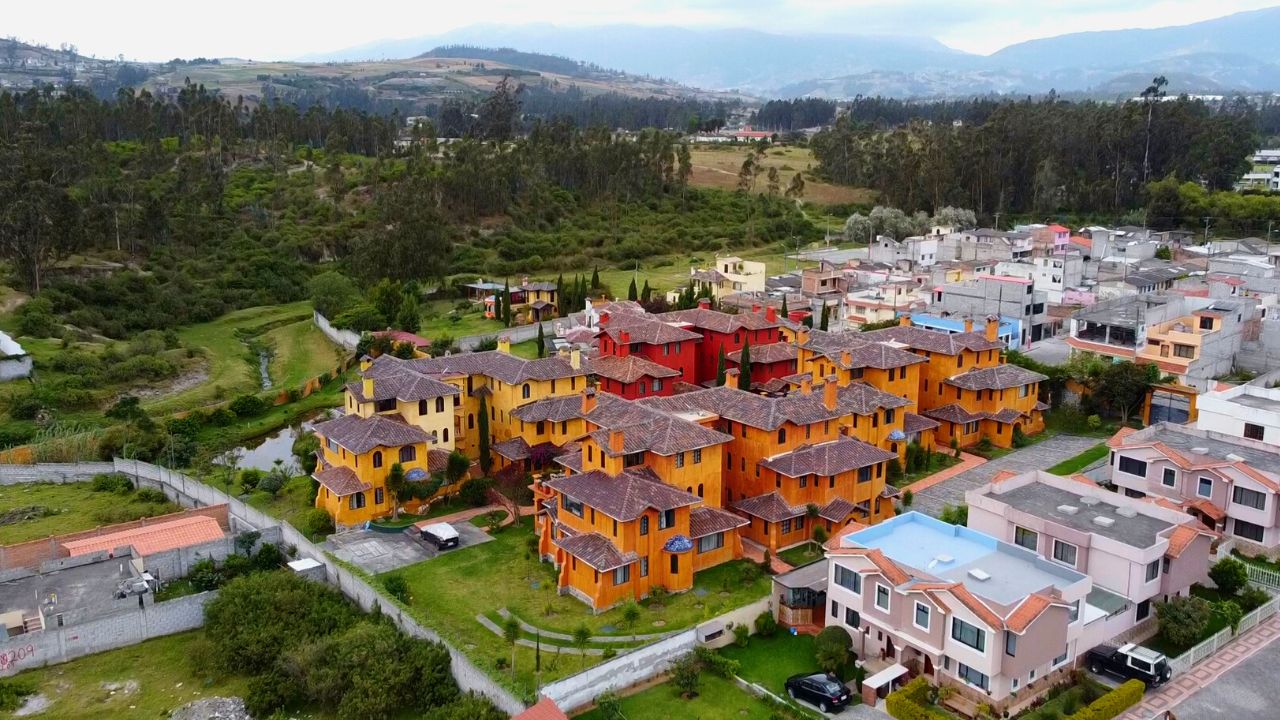
The pastel-hued houses of the city stretch on for more than 60 kilometres, gradually fading into eroded hills studded with eucalyptus trees that shimmer in the crisp blue sky – if it wasn’t for the snow-capped mountains on the horizon I might well be back in Australia.

And like Australia, this part of the world is known for its record-breaking roads. We’re on the Pan-American Highway, thought to be the world’s longest driveable stretch of tarmac and extending some 47,958 kilometres from Prudhoe Bay in Alaska to the lower reaches of South America. It drops us at San Agustín de Callo, a family-owned hacienda in the foothills of Cotopaxi, one of the highest active volcanoes in the world. 

Part of the hacienda is built above Incan ruins, and the restaurant is still housed in a building with stonework so fine it’s stayed in place for centuries without cement. The rooms – with cosy fireplaces and patchwork bedspreads – the small church and the restaurant all encircle a central courtyard, its lemon-yellow walls hung with potted cacti and pink banana-passionfruit flowers and bunches of vibrant gentian violets. Dogs sleep in the sun – I even see a llama strut by.

San Agustín is a hotel first and foremost, but many people come here just for the food – in particular, for the locro. Big earthenware bowls are set before us at the communal table while a waiter ladles out golden soup from an even bigger bowl. The cheese-and-corn broth is studded with hunks of potato to which I add slivers of an avocado that appears to have been grown on steroids. A handful of roasted corn and a generous spoon of aji criollo add texture and warmth. It’s earthy and rich and way too tasty to be good for you, and I’m still having illicit thoughts about it months after returning to Australia.   

By the time I’ve licked the last remnants of cheesy goodness from my bowl the storm clouds are rolling in, obscuring Cotopaxi and making an excursion to the volcano’s namesake national park seem very unappealing. We fortify ourselves with cups of tea made with coca leaves (thought to help with altitude sickness) before braving a stroll through the park, the rain near-horizontal as we set out. I can barely see my companions next to me let alone the hummingbirds, condors, white-tailed deer and paramo wolves that call the forest home. Hopping back on the bus, I’m so cold I almost wish I had a hip-flask of chicha on me. Almost.

It’s all downhill from here – from Cotopaxi, we’re descending to the petite hillside town of Patate, a handful of ranches and stone huts strung along a valley. We pass flocks of sheep, little schools with soccer pitches, sleepy villages with roosters and dogs out front, and tiny churches. It’s still raining when we arrive at Hacienda Leito where a bizarre collection of religious artefacts, taxidermy and musical instruments clutter the walls. Dinner here is a simple affair – quinoa, local cheese, freshwater trout, salad from the garden – that ends on a high note: a glass of canelazo, a warming brew of sugarcane alcohol, citrus, sugar and cinnamon, which I sip by a roaring fire.


Cuenca: Tamale
Clouds are clinging to the sides of the valley as we leave Patate, heading uphill again on our way to Cuenca. Below us, the landscape is dotted with greenhouses, used to cultivate the roses that are among Ecuador’s main exports and will be delivered, eventually, to Russia and the United States. Above us is Chimborazo, Ecuador’s highest mountain. We’re headed its way. 

The landscape is distinctly more volcanic here, a scrubby steep backdrop covered in lichen and vegetation. We stop to photograph a herd of vicuña, a type of wild South American camelid. I take a couple of laboured steps across the moonscape-like mountain flank before retreating back to the warmth of the bus.
Arriving at the 16th-century city of Cuenca, I’ve prepared myself for more cloud and more rain but am pleasantly surprised by a spectacular high-altitude sunset. At Santa Lucia hotel, we’re met by warm showers and heaters and a lovely restaurant serving piping-hot tamales.

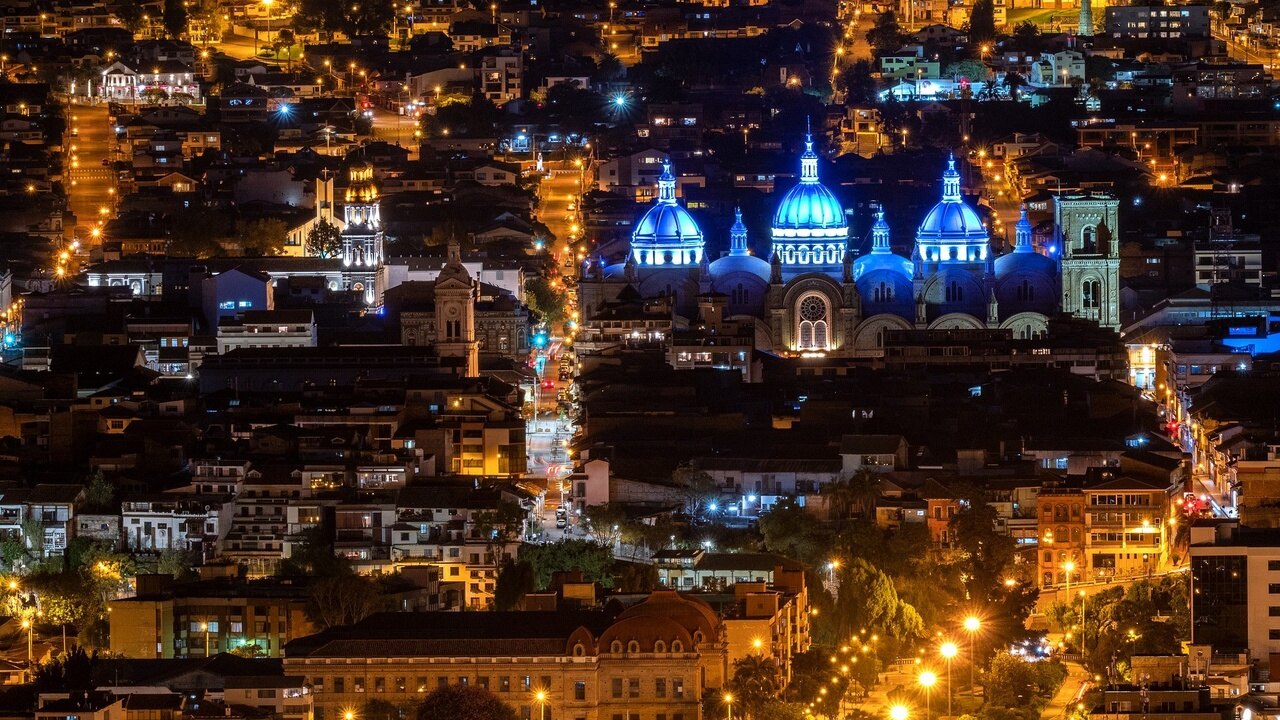
Like Quito, the city of Cuenca enjoys World Heritage status. It’s also Ecuador’s cultural capital but, truth be told, there’s not really all that much to do here. And that’s probably why I like it so much. There are no iconic sights, as such, but there’s still a lot to see: whitewashed and pastel colonial buildings, precariously perched riverside mansions and lots of churches fronted by stalls selling long loops of polished rosary beads, candles and religious pictures.

It’s the lead-up to Corpus Christi and there’s a festive fervour in the air – and on the table. The tamales (corn-flour pockets filled with minced pork, eggs and raisins, wrapped in achira leaves and steamed) I devour at Santa Lucia are eaten year-round but are particularly popular during celebrations, as are humitas (like tamales but made with seasoned corn, eggs, butter and cheese, stewed inside corn leaves) and alfajores – cookies filled with a milky caramel known as dulce de leche.

I pick up a packet of the sweet biscuits at Cuenca’s central market, where cholas cuencanas – women from the surrounding countryside dressed in white blouses, colourful pleated skirts and felt hats with feathers – sell piles of meat and vegetables and Panama hats. On the ground floor, I ogle gravity-defying bundles of fruit: some of it familiar, most of it not. A cholas cuencanas convinces me to purchase a bundle of finger bananas to tide me over on our journey to Guayaquil, 160 kilometres northwest and some 2,500 metres lower than Cuenca.

Guayaquil: Cuy
I’ve had many a meal that’s hard to swallow: scorpions and starfish in Beijing, horsemeat tartare in Paris, balut in the Philippines. I suspect I’m about to add guinea pig to that list.

Arriving in Ecuador’s largest city, we make our way to the Don Bosco Avenue neighbourhood, famed for its restaurants serving cuy (guinea pig) as well as lechón (suckling pig) and a soup made from cattle hooves known as caldo de patas.

The spit-roasted cuy are expertly carved up with a few swipes of a cleaver before being loaded onto plates with a flourish. I’m well aware of their nutritional value – high in protein, low in fat and cholesterol – and of the environmental benefits of eating them, but still, I find it hard to choke down my first mouthful. It tastes a bit like chicken – doesn’t everything? – and a bit like rabbit. It’s not offensive and if I didn’t know what I was eating, I’d probably have thoroughly enjoyed the meal. I nibble on a leg, then convince myself that I need to leave space for tonight’s lavish dinner.

Historic black-and-white photos of Guayaquil line the walls of Lo Nuestro restaurant, a perennial favourite in the city’s hip Urdesa district. Seafood is king and the kitchen here prepares a prawn ceviche that I could eat all day. There’s also crab soup and grilled river trout with crab sauce and sea bass sautéed in coconut milk. We order pitchers of sangria and eat bread with spoonfuls of aji criollo. And at the end of a meal, waiters wheel over two trays: one laden with biscuits and cakes and petite silver bowls of ice cream; the other straining under the weight of liquor bottles.

But I can’t look past the dulce de leche torte, which is sweet and delicate and reveals itself in intriguing layers – a lot like Ecuador, really.  •

Photography by Natasha Dragun. 


TRAVEL FACTS

getting there
LAN Airlines offers more flights from Australia to South America than any other carrier, with daily one-stop flights from Sydney to Santiago, Chile. The airline also operates multiple daily services from Santiago to Quito, Ecuador’s capital. 1800-558-129; lan.com

getting around
Metropolitan Touring offers a series of excellent guided tours around Ecuador: everything from city tours to comprehensive adventure, trekking and bird-watching excursions. The company also organises cruises around the Galápagos and has a presence in other South American countries (Columbia, Peru, Chile, Brazil and Argentina). metropolitan-touring.com

when to go
There’s no one good time to visit Ecuador, with major climatic variations between the Andes, the Pacific coast, the Oriente and the Galápagos. The highland dry season is June through September.

where to stay
• Casa Gangotena. Bolivar 541 y Cuenca, esq., Quito; casagangotena.com
• Hacienda Leito. Patate; 593-3/285-9329; haciendaleito.com
• Hacienda San Agustín De Callo. incahacienda.com
• Hilton Colon Guayaquil. Av. Francisco de Orellana Mz. 111, Guayaquil; 593-4/268-9000; hilton.com
• Hilton Colon Quito. Av. Amazonas N 1914 y Av. Patria 1, Quito; 593-2/256-0666; quito.hilton.com
• Hotel Plaza Grande Quito. García Moreno y Chile (esquina), Quito; 593-2/251-0777; plazagrandequito.com
• Hotel Santa Lucía. Borrero 8-44 and Sucre Cuenca; 
593-7/282-8000; santaluciahotel.com
• Boutique Hotel Mansión Santa Isabella. Veloz 2848 entre Carabobo y Magdalena Dávalos, Riobamba; 
593-3/296-2947; mansionsantaisabella.com

further information
For tips on what to do and see in Ecuador, contact the Ministry of Tourism of Ecuador, Quito Tourism and Cuenca Tourism. ecuador.travel, quito.com.ec, cuenca.com.ec

Hyatt Regency - the perfect escape
Get our latest newsletter
Sign up today to receive travel tips, the latest travel news & exclusive competitions, straight to your inbox!


V&T Takeoff
Updates from our editors and writers
The team from the Dallas Convention and Visitors Bureau were in town last week to update Australia on some of the BIG things happening in the Texan state.
V&T mag dropped into Bali last month and helped the W Retreat & Spa celebrate their 2nd anniversary and what a splash it was. With local and international fashion designers on display, the W Lounge was transformed into a catwalk party zone. 2500 people flowed through the resort late into the night, moving to NYC DJ Sandy Rivera. This was the biggest ticket in Bali for some time and the resorts pulling power is a testament to just how hot this property and international hotel brand actually is.www.vacationsandtravelmag.com/Mca/874/765/3/0/0/#takeoff1 How did we cope the next day? Poolside. Don’t wait until their 3rd anniversary as the vibe, sound and style of this resort makes for a very cool holiday. In the heart of Seminyak and right on the beach, Bali beckons.
Thanks to our friends at Air France we got out of the office for the day and enjoyed a great round of golf at the annual Financial Markets Charity Golf Day and Gala Dinner. Held annually in February, this event as well as the  Financial and Media Markets Charity Sailing Regatta in October raises AU$1.2 million for a wide range of charities.The ASX Group and Thomson Reuters Australia (formerly Reuters) joined forces in 1999 to form a Charity Foundation with the objective of helping Australian-based children, disability and medical research charities by organising fundraising events in conjunction with the Financial Markets. Pictured here: Thomas Reeves Air France, Middle, Patrick Benhamou, Atout France; Anthony Gallagher Vacations & Travel magazine.
Vacations & Travel magazine rubbed shoulders with local and international buyers and sellers of travel from around the globe at 2013 AIME (Asia Pacific's Incentive Meeting Expo). This is the biggest event on the Australian travel industry calendar, where key decision makers congregate to network over a three-day event of hosted parties, trade and leisure travel meetings and press conferences.
The who's who of Sydney's entertainment industry turned up for the recent opening of the city's newest hotel to receive a makeover, The Parkroyal. Located in Darling Harbour, the property has just emerged from a milt million-dollar makeover to reveal striking rooms and seriously sexy public spaces. Speaking of sexy, some of the celebs on hand to celebrate the re-launch included Casey Burgess, Danielle Blakey and Amy Milne, not to mention Timomatic who entertained the crowds into the witching hours…


about us advertise subscribe & win contact us Golf Vacations