From upscale restaurants to leafy parks, colonial buildings to mega-resorts, there’s plenty to keep you busy on a whistlestop tour of this one-time Portuguese enclave.
DAY ONE
12.00: Macau may have long surpassed Las Vegas as the world’s gambling capital but mercifully, the charms from the era before dice, cards and roulette wheel have survived intact. The ferry journey from Hong Kong takes around an hour; once you’ve cleared immigration, make the most of the hotel shuttles ready to take you to where you’re staying. After dumping your bags, spend an afternoon enjoying the old city.
Macau’s past as a Portuguese trading colony gives it an odd look – faces and signs are mostly Chinese but the pastel-painted churches, cobbled streets and mosaic-tiled public squares betray its Mediterranean roots.
13:30: Lunch on the go can be grabbed at a little noodle stall or one of the numerous outlets serving Portuguese egg tarts on Rua de São Paulo. A classier option is the Lusitanus Café on the first floor of the Macau Tourism and Cultural Activities Center. The Center is conveniently located at the bottom of the steps that lead up to the ruins of St Paul’s. All but the façade of this theological college burned down in 1835; the spectre-like remains make for an arresting and much-photographed sight.
A number of nearby churches are worth diving into, especially São Domingos. The sunshiney Spanish ambience and wedding-cake-like altar feel thoroughly un-Asian.
Also check out Lou Lim leoc Garden and Camões Garden: the latter is the largest of its kind in the city and is a popular spot for locals to do tai chi in the morning cool.
15.30: The Fortaleza do Monte, set up as a primary defence point for the Portuguese exclave, is a great spot for enjoying 360-degree views of the city. What’s inside the wall’s ends is equally interesting. Macau Museum is a highlight, and sprawls over three levels. Parallel timelines chart Western and Chinese developments in philosophy, invention and culture, while interactive displays tell the story of Portuguese occupation, the tea trade and the value of Chinese porcelain to Western merchants. Reconstructed houses showcase the marriage of Portuguese and Chinese tastes, while the top floor shines a light on contemporary life in Macau. There’s a delicious richness and complexity in its history that’s remarkable for such a tiny peninsula.
18.00: Partly thanks to its high-roller image, Macau has become one of Asia’s most talked-about dining destinations. Robuchon au Dôme inside the Grand Lisboa Macau is the hottest ticket in town, with three Michelin stars, but the Imperial Court inside the MGM Macau is Michelin-starred, too, and offers great-value Cantonese cuisine with some creative twists.
20.00: World-conquering Canadian-based circus Cirque du Soleil has its Macau home inside the The Venetian Macao resort complex. As with Cirque shows elsewhere, the plot is nonsensical but the production is so hugely impressive that you’re unlikely to care. Expect sinuous movement and jaw-dropping aerial acrobatics in one of the city’s increasingly frequent nods to Vegas-style entertainment.
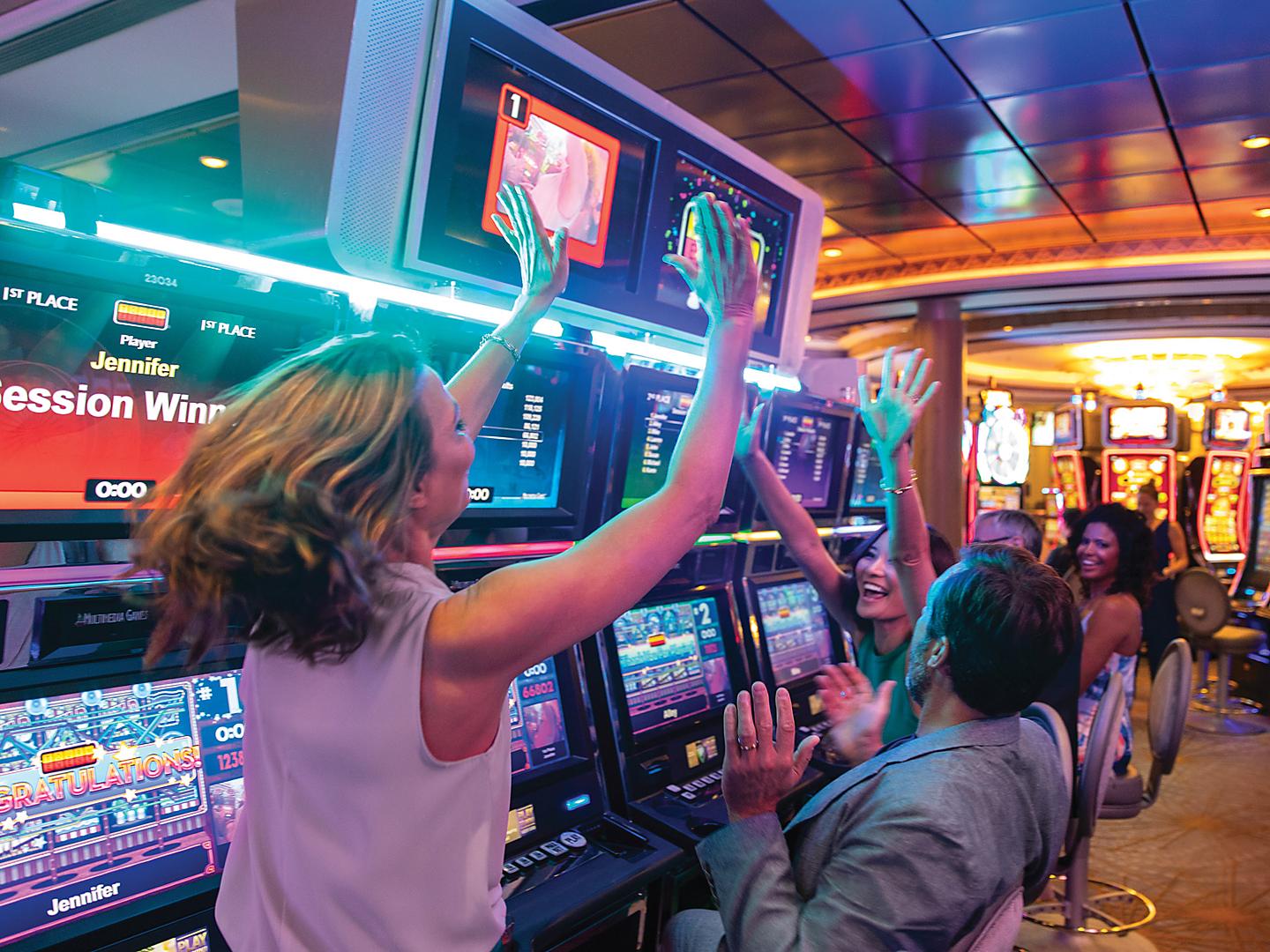
21.30: The gambling isn’t Vegas-style, however. After the show, mooch around the Venetian for some world-class people-watching. Aside from its over-the-top replicas of the Grand Canal and St Mark’s Square – complete with gondola rides – the Venetian has a massive gaming floor. The size of some of the bets being placed is eye-popping.
DAY TWO
09.00: At the southern end of the Cotai Strip, Seac Pai Van Park is good place for a stroll. A couple of walking trails are mapped out, and explanatory signs on the trees make it a semi-educational experience. Be sure to visit giant pandas Kai Kai and Xin Xin, who frolic in an enormous pavilion with indoor and outdoor areas designed for unobtrusive viewing as the cute couple go about their daily business (which, to be fair, consists mainly of munching bamboo). Those travelling with kids or soft-hearted adults might want to bypass the gift shop: the danger of coming out with a pair of stuffed toy pandas under your arm is high.
11.00: The A-Ma Temple is one of the oldest surviving buildings in Macau – parts of it are more than 500 years old and were there before the Portuguese arrived. The name Macau comes from it (A-Ma-Gao means “place of A-Ma”) and it still attracts large numbers of genuine worshippers among the tourists. The temple spreads over a steep hillside, with numerous shrines built along the winding paths and legions of incense sticks creating a distinctive aroma. There seems to be little excuse needed to set off firecrackers within the grounds – either it is entertainment or it’s senseless noise, depending on your perspective.
12.00: Not far up the road is the Restaurante Litoral, widely regarded as the top place to try Macanese cuisine. The menu ere takes in influences from all over the former Portuguese empire, pulling together the best of European, African, Asian and South American cuisine in dishes such as tacho (a type of meat stew) and minchi (minced beef with fried potato, onions, soy and egg), served up in a homey dining room.
14.00: Walk off your lunch exploring some of the quieter, more upmarket areas of the peninsula, towards the reclaimed land that surrounds the city’s lakes. Your target is unmissable: Macau Tower is a 338-metre giant. It’s very much size over beauty – the mass of concrete hardly screams elegance – but, if skies are clear, the views from the observation deck are rather splendid. More adventurous types won’t have come for the outlook, however; Macau Tower is home to the world’s highest commercially operated bungy jump. Bungy pioneer AJ Hackett’s operation here sees daredevils plummet to earth from 233 metres up.
A couple of marginally less terrifying options are also available. Skyjump sees you fall from the same height and at speeds of up to 75 kilometres per hour, but you’re in a harness and the fall speed is managed so that you land slowly on your feet rather than bouncing around. Skywalk X involves a stroll around the perimeter of the tower – at 233 metres above ground, with no handrail or barrier. Again, you’re harnessed to avoid calamity. And if you’re really game, there’s a Mast Climb to the tower-top, 338 metres in the air. It’s smart to make reservations in advance to get your preferred timeslot.
16.00: You’ll need a strong drink after your Macau Tower experience, and the Wine Museum is a good option. It offers a surprisingly thorough overview of wine history – did you know the first grape vines came from Georgia? – and you’re free to sample a handful of Portuguese wines on your way out.
In the same building is the Grand Prix Museum. At Formula 3 level, the Macau Grand Prix is seen as the equivalent of the Monaco Grand Prix in Formula One. Inside the museum are a few cars and displays on drivers who’ve previously won the race, including Ayrton Senna and Michael Schumacher. But it’s the simulators that make the museum worth visiting; the opportunity to crash your way round the circuit is both fun and alarming.
18.30: Grab an early dinner at António, a hole-in-the-wall Portuguese restaurant in the old village of Taipa. Traditional dishes include a superb seafood stew and bacalhau, salted and dried cod served with potato and garlic. Or reserve a table in the red-and-gold Wing Lei dining room at the Wynn for show-stopping, Michelin-starred Cantonese fare.
20.00: Macau’s homegrown competitor for the Cirque du Soleil show is The House of Dancing Water. Massive amounts of money have been poured into making this aquatics and acrobatics spectacular at the City Of Dreams complex, and the wow factor is through the roof.
22.00: For a nightcap, the Vasco Bar and Lounge at the Mandarin Oriental Macau – one of the few big-name properties here without a casino attached – has the right touches of style and class. Smooth live music helps the cocktails go down nicely; you don’t have to be a high-roller to enjoy life’s finer things in Macau. •
Photographs courtesy of the MGTO.